2x2 Prioritization
Prioritize options against 2 potentially contrasting criteria to identify the most important options to focus on now.
When to use
- Whenever the team has to decide the most important items to focus on when presented with multiple options and there are contrasting opinions on how to proceed.
Why use it
- This will benefit the team by building a shared understanding and alignment among a group of people in order to more easily determine how best to proceed.
What you need
- Whiteboard or digital version like Miro
- Dry erase markers
- Sticky-notes
- Sharpies
- Painter’s tape
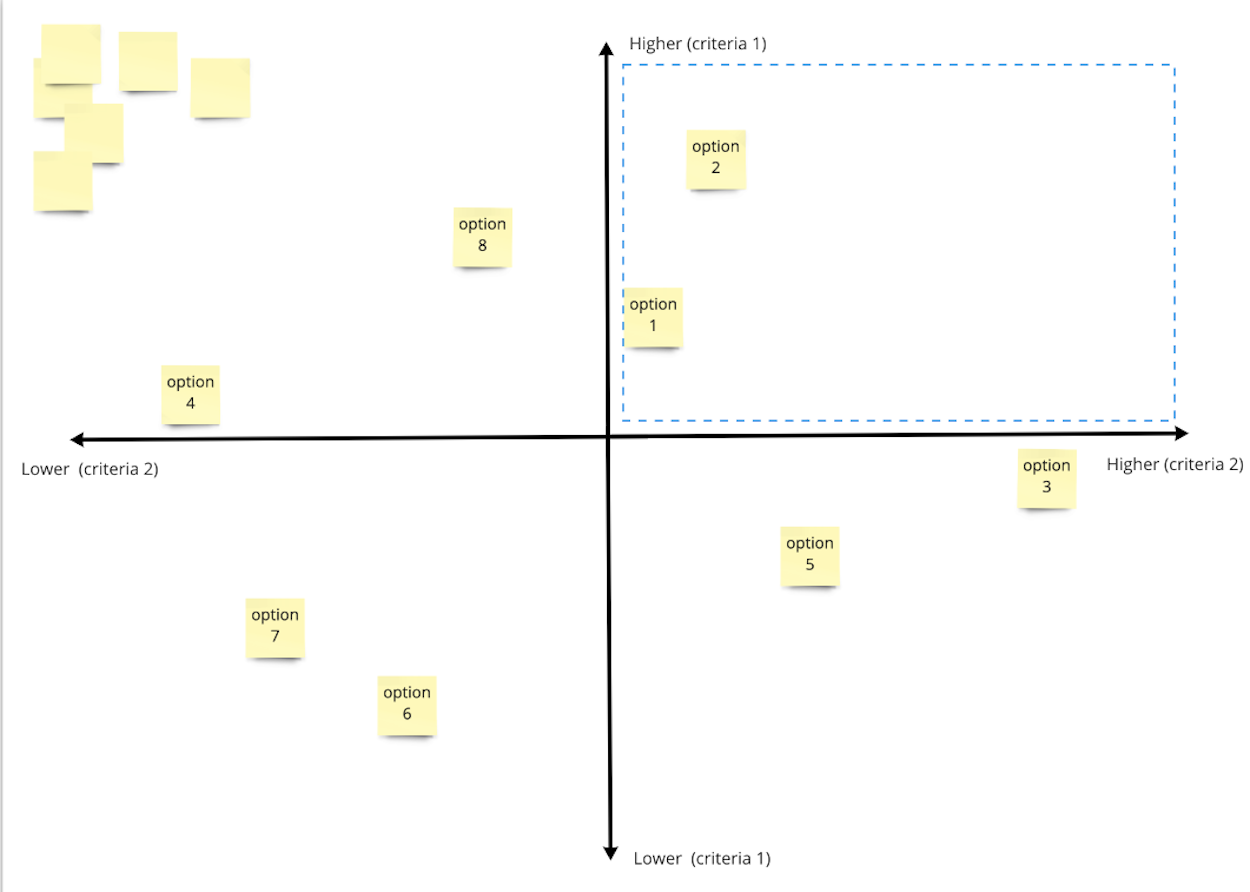
How to Use this Method
Sample Agenda & Prompts
-
Preparation: As a group, agree on 2 relevant prioritization criteria.
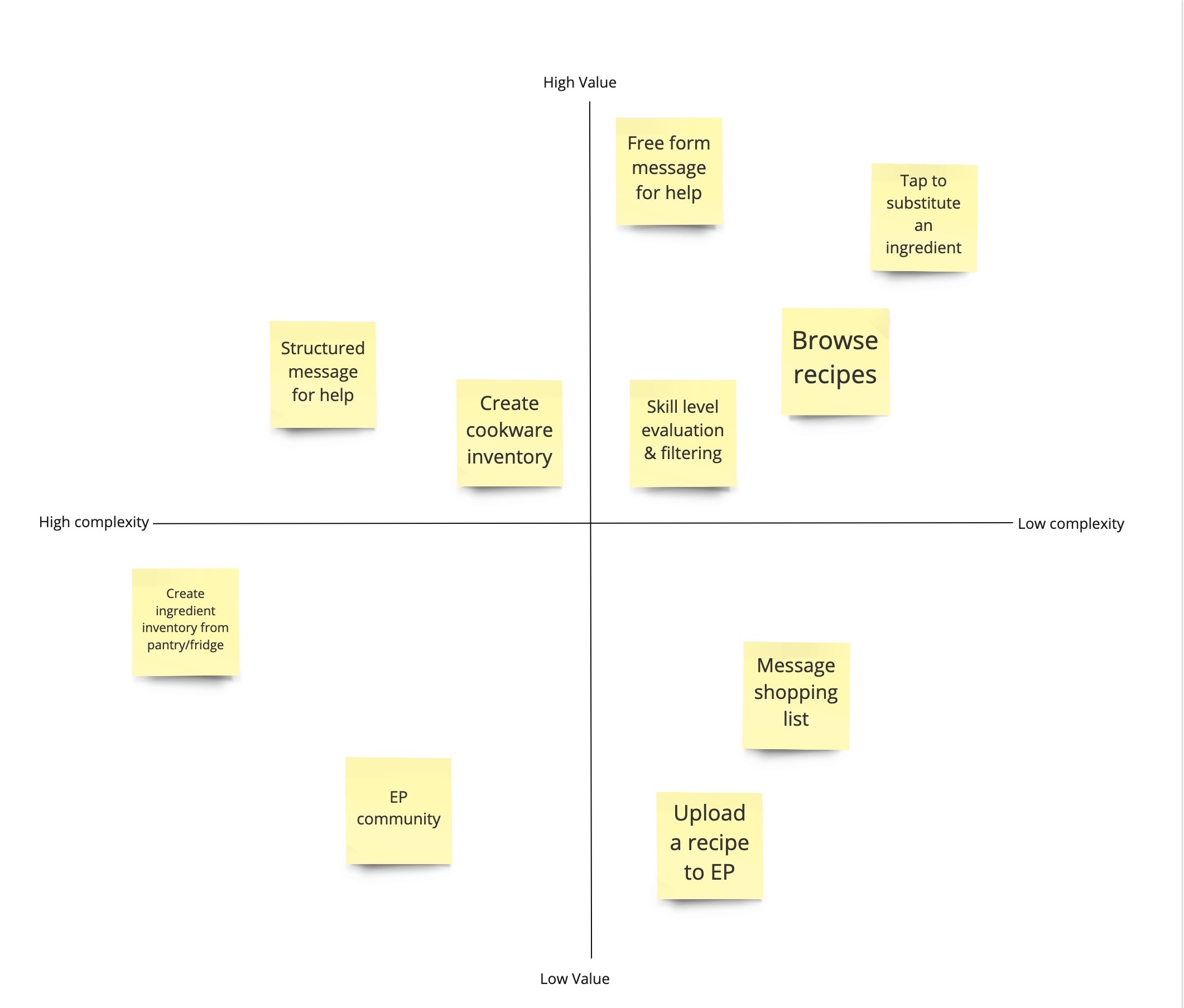
Examples: Impact vs. Likeliness, Value vs. Complexity, Risk vs. Ease of Mitigation
-
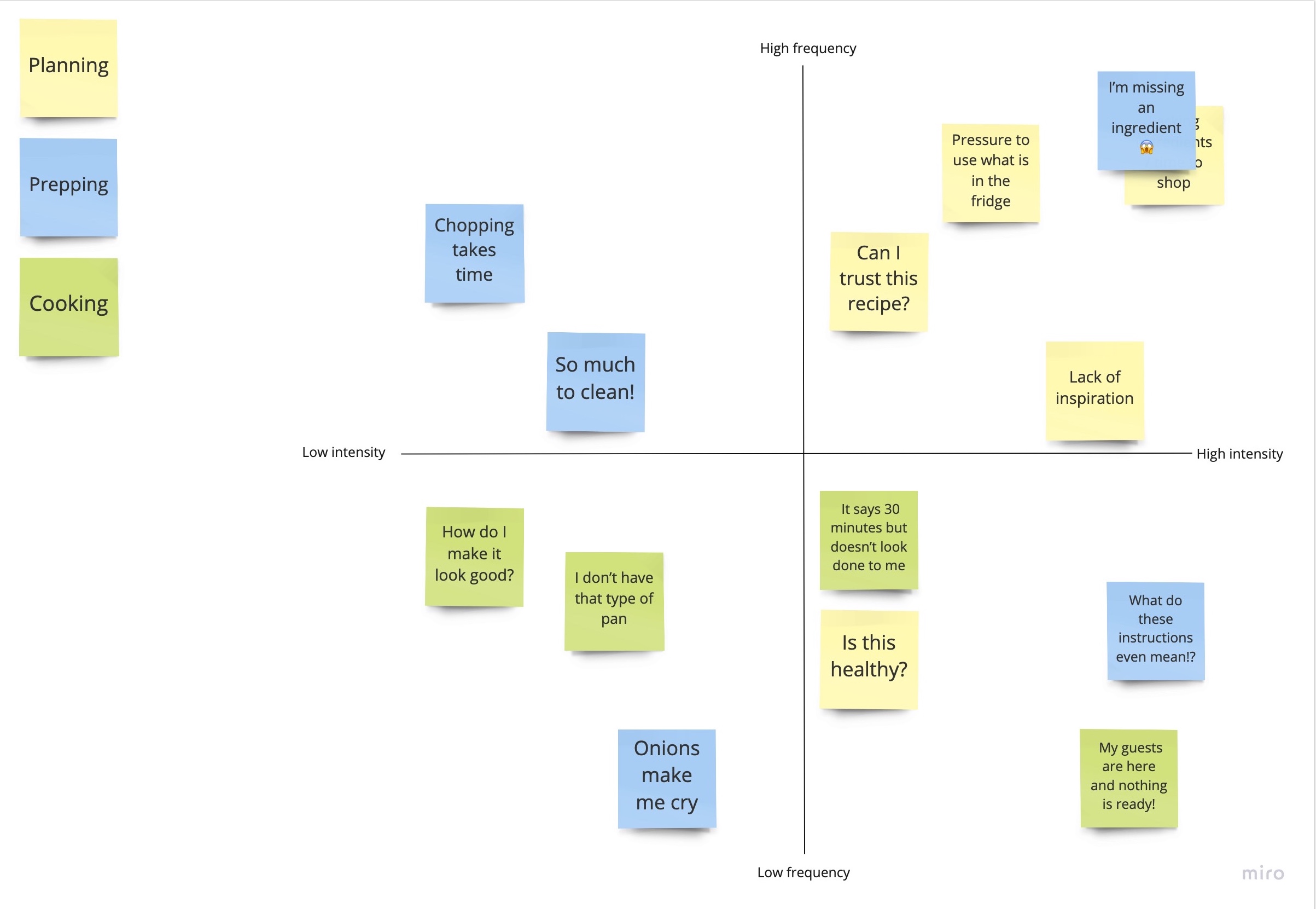
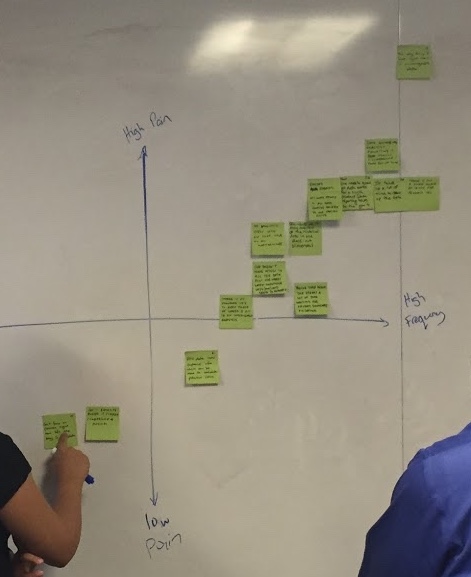
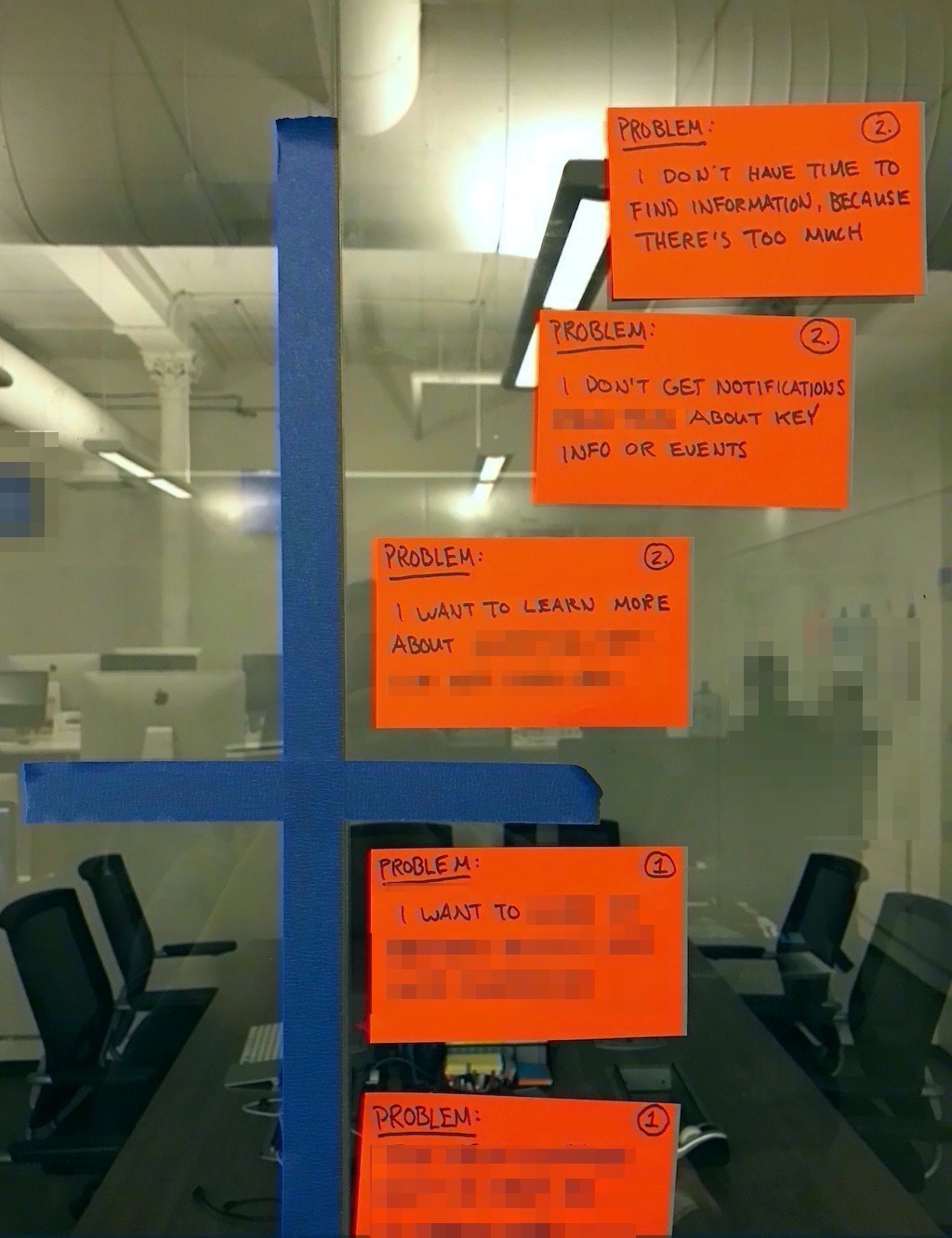
Create 2 perpendicular intersecting axes and label each axis with one of the chosen criteria.
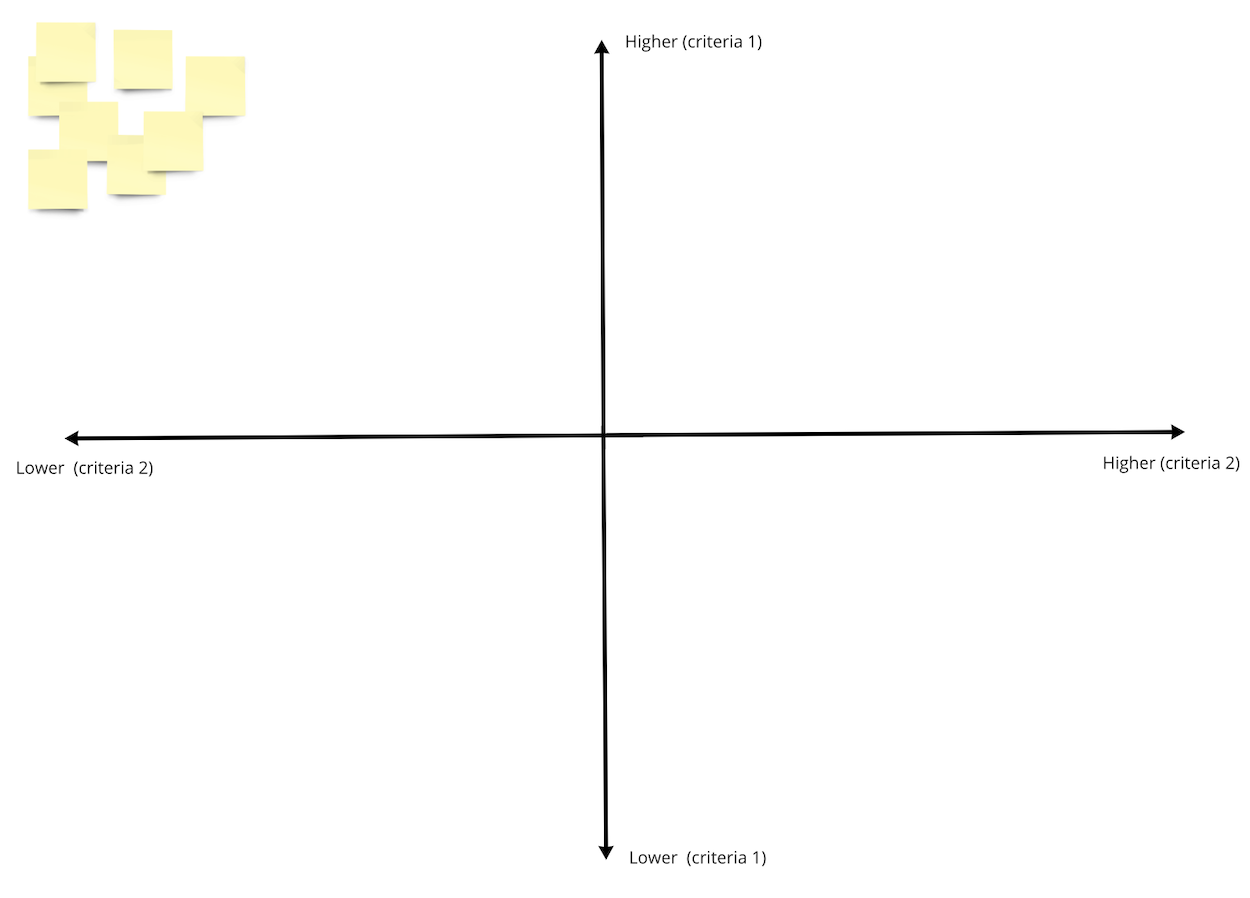
Tip: Label the axes such that the top-right quadrant represents the most important/highest-priority. This is a convention that will make it easier when using this practice repeatedly.
-
Start by selecting an option at random and place it near the center.
-
Choose another option and, as a group, position it relative to other options on the grid, vertically and horizontally.
Tip: Avoid placing any 2 options on the same row or column. Each option should be clearly placed in a unique horizontal and vertical position on each axis to avoid any ambiguity.
-
Repeat step 4 until every option is positioned on the grid. The highest priority options should be in the top-right quadrant.
Tip: If the options are weighted towards a particular half or quadrant, you can reposition the options so that roughly half are on either side of each axis. This will remove ambiguity and make it easier to make prioritization decisions.
Success/Expected Outcomes
You know you are done when your group has decided on an option (or options) to focus on.
Facilitator Notes & Tips
-
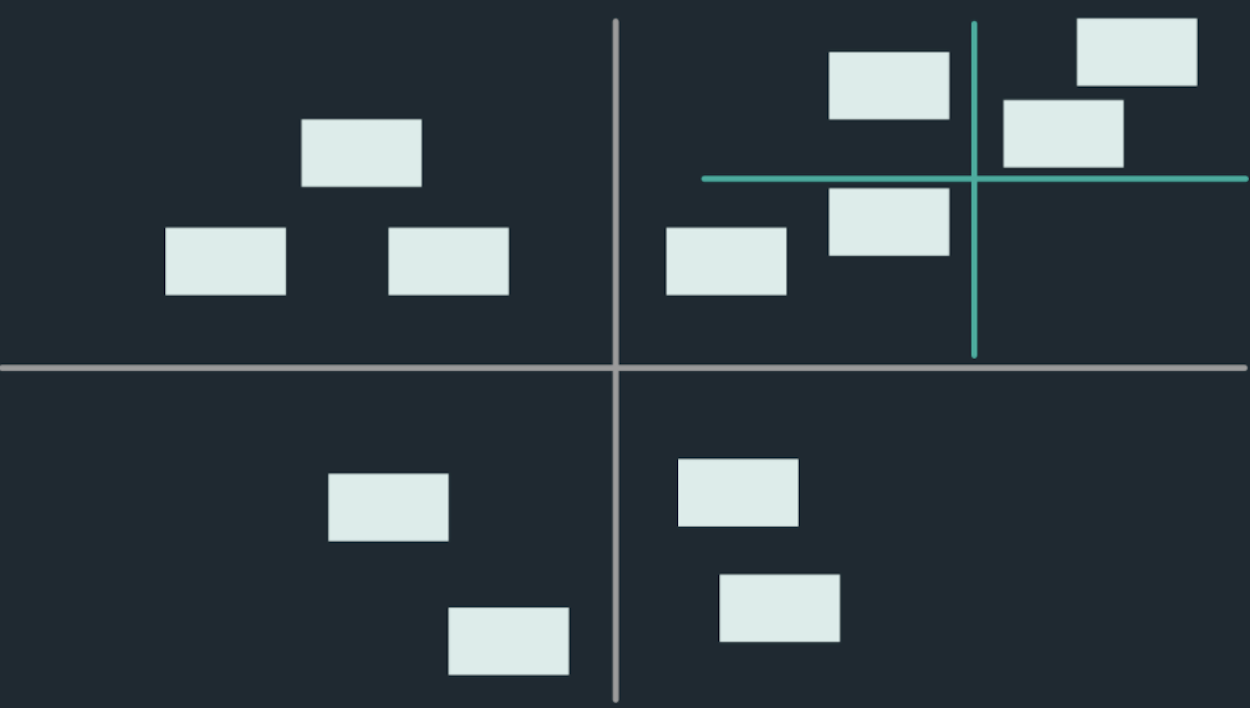
If there are too many priority solutions in the top right quadrant, re-draw the axes within that quadrant to further separate the solutions. Remember that this is possible because the axes are relative, not absolute. Keep adjusting until you land somewhere manageable.
-
Too many options can make this practice more difficult and time consuming. If there are 20+ items, consider spending time removing options that are irrelevant to the criterion selected. Involve people who can evaluate against the chosen prioritization criteria (e.g. a Designer should speak to usability, while an engineer should speak to technical complexity).
-
Develop the prompt for the 2x2 before the X/Y axes. If the axes don’t resonate with the prompt, the group will struggle with placement and focus.
-
When choosing qualifiers for the X and Y axes, consider:
- Choose a less debatable qualifier for the Y axis. A qualifier with a stronger yes/no statement will help people with initial placement and allow the group to disqualify items (get them below the X axis) with less debate.
- You want debate to happen along the X axis, so choose a qualifier which leaves more room for debate.
Related Practices
Real World Examples