User Research Introduction Session
Level-set on user research best practices
When to use
- Given the importance of research early in the project, this session is typically done as soon as possible after Kickoff in advance of any stakeholder interviews or exploratory user research.
Why use it
- Continuous research helps ensure that we're building something of value at each step. Needs and problems live with people, so in order to create value we need a deep understanding of how well we're solving those problems. This session offers an overview of research best practices in order to align the team prior to the first stakeholder or user interviews they conduct.
What you need
- Whiteboard or digital version like Miro
- Dry erase markers
How to Use this Method
Sample Agenda & Prompts
-
Write the agenda on the whiteboard or shared digital workspace:
- Types (10 min)
- Roles (10 min)
- Flow (10 min)
- Dos & Don’ts (10 min)
- Role Play (25 min)
-
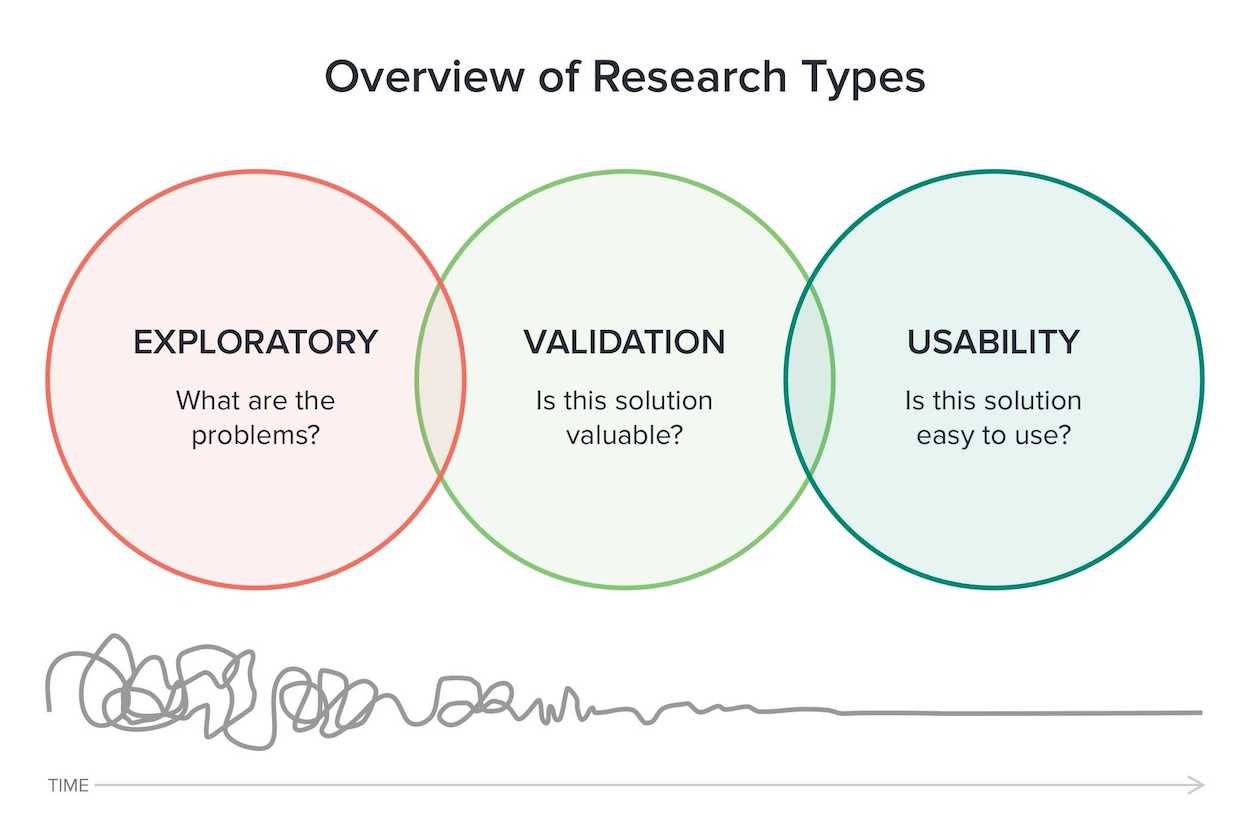
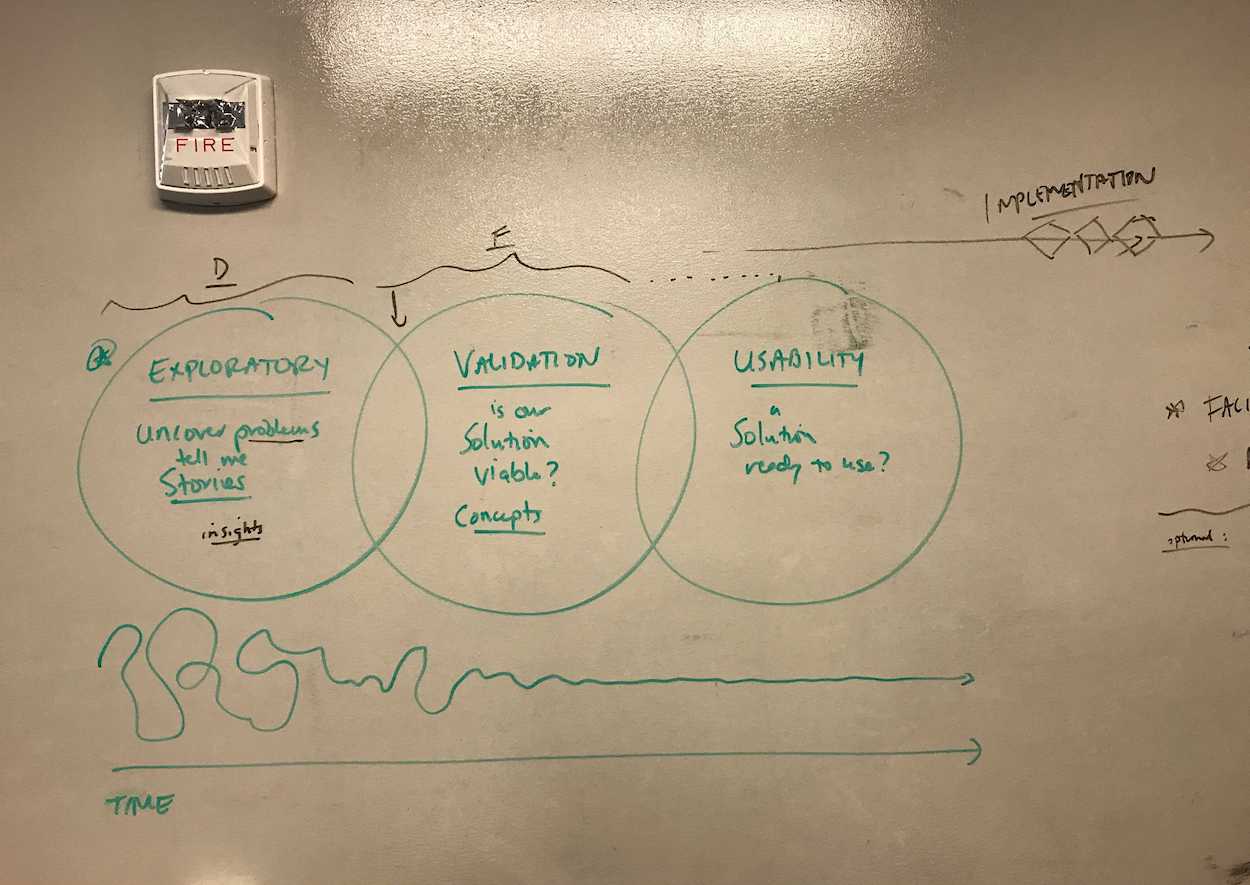
First, describe the three main types of research by drawing/showing a three part Venn diagram:
- Exploratory — what are the problems?
- Validation — is this solution valuable?
- Usability — is this solution easy to use?
-
Next, describe the main roles involved in research:
Critical:
- Lead Interviewer — facilitates interview
- Note-taker(s) — ideally 1 primary & 1 secondary to help ensure good coverage
Optional:
- Co-Pilot — supports Lead Interviewer
- Media Wrangler — handles recording
- Transcriber — types up interview as it unfolds
-
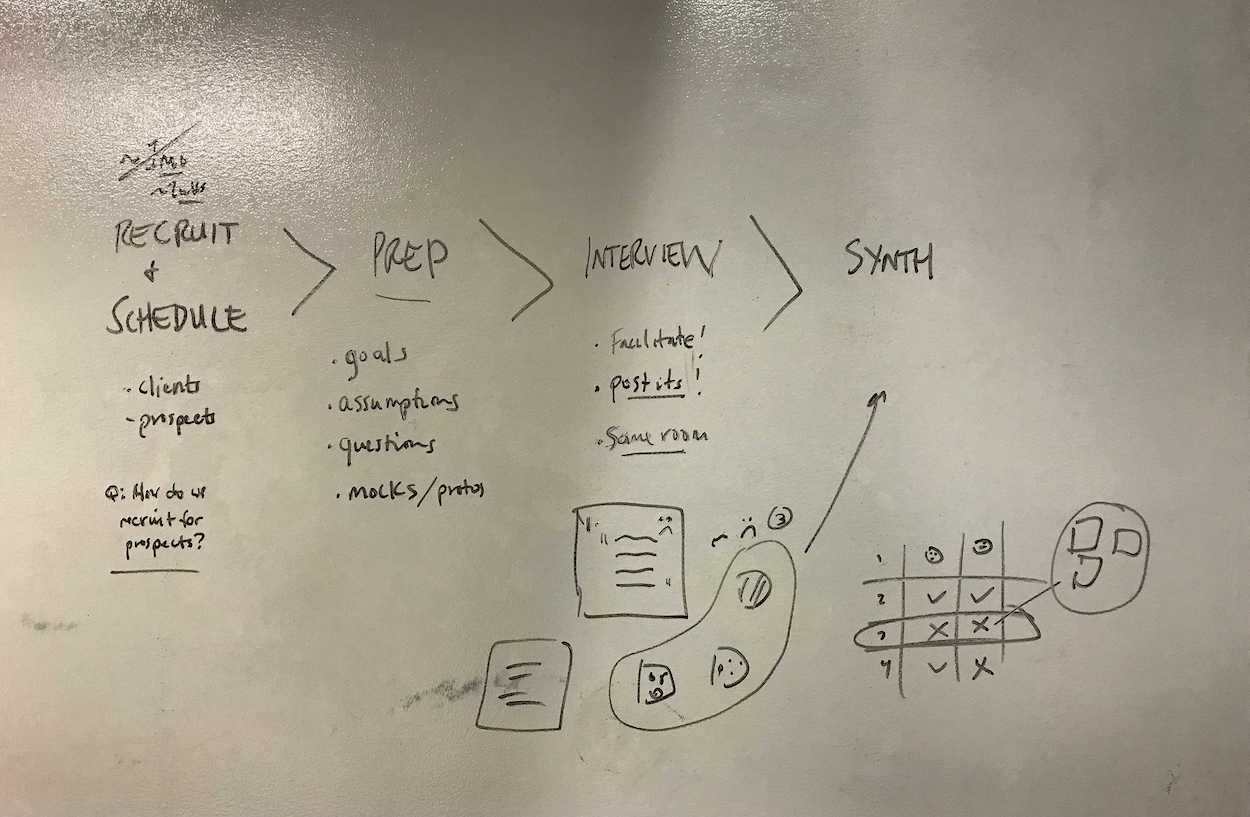
Describe the general flow of research:
Recruit & Schedule — Pick days, reach out to users, schedule slots
Prep — Goals, assumptions, questions, design artifacts (if necessary)
Conduct Interviews — Facilitate! Take notes in voice of user, record aspects that matter
Synthesize Findings — Group like comments across users to find trends; see Research Synthesis
Tip: Drawing these four steps on the board showing a progression can be really helpful to visualize how they flow together
-
Share biases to be aware of and key “dos” and “don’ts” when conducting research.
-
Spend the remaining time role playing:
Option 1: Pair Role Play
- Break into pairs, giving each person a “Pause” card
- Identify roles (Interviewee, Interviewer)
- Conduct the interview for 10 minutes, pausing to discuss feedback
- Reflect using a plus/delta format
Option 2: Group Role Play
- Identify roles (Interviewee, Note-takers, Interviewer)
- Conduct the interview for 10 minutes
- Reflect using a plus/delta format
Success/Expected Outcomes
You’ve succeeded when the team feels confident they can conduct research in a way that garners usable information.
Facilitator Notes & Tips
You can make as many or as few visual aids ahead of time as you like. It can be equally successful printing/hanging things you want to focus on as it is drawing them as you talk.
If the team feels like they want more practice before conducting research with actual users, don’t hesitate to schedule a follow-up session or two.
Real World Examples
Recommended Reading
Lean UX by Jeff Gothelf and Josh Seiden
UX For Lean Startup by Eric Ries